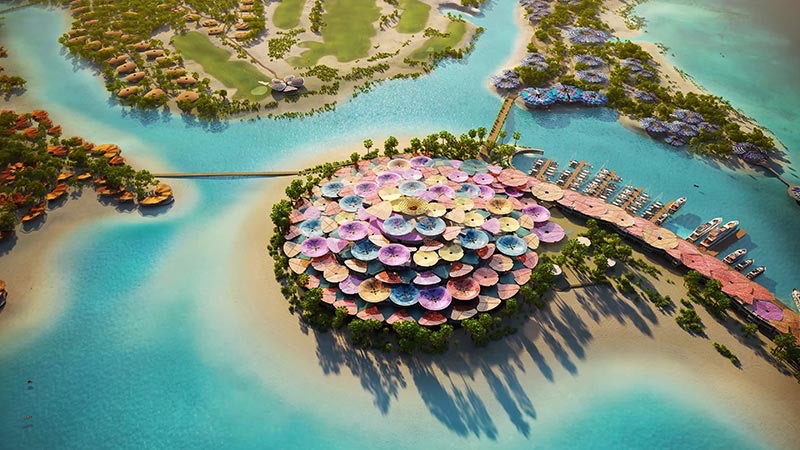



Along the pristine shores of the Red Sea, one of the most ambitious tourism developments of our time is taking shape: the Red Sea Project. A number of exclusive resorts have already opened, and by 2030 the plan includes over 50 hotels, residential properties, a dedicated airport, and a fully renewable energy infrastructure – all set within protected ecosystems of coral reefs, desert landscapes and mangrove forests.
What sets this project apart is its promise to go beyond sustainability. The aim is not only to minimize environmental impact, but to actively improve the surrounding nature. Visitor numbers are strictly limited to one million per year, power is sourced entirely from solar and wind, and the architecture prioritizes local materials and smart climate-responsive design over energy-intensive air conditioning.
While much is still under construction and the long-term success remains to be seen, the Red Sea Project is already more than a vision. It’s a bold experiment for an industry in transition.
One thing is clear: The Red Sea Project represents a daring attempt to unite luxury, sustainability and climate adaptation – with an open outcome, but a pioneering spirit.
Das Red Sea Project ist ein groß angelegtes Tourismus- und Stadtentwicklungsprojekt in Saudi-Arabien. Es umfasst über 90 Inseln im Roten Meer und verfolgt das Ziel, nachhaltigen Luxustourismus mit modernster Umwelttechnologie zu verbinden.
Das Projekt setzt auf umweltfreundliche Energiequellen, wie Solarstrom, Meerwasserentsalzung und ein emissionsfreies Transportsystem. Ziel ist es, CO₂-neutral zu operieren und das empfindliche Ökosystem des Roten Meeres langfristig zu schützen.
Die erste Phase mit mehreren Hotels, Infrastruktur und Flughafen sollte bis 2024/2025 abgeschlossen sein. Der vollständige Ausbau wird voraussichtlich bis 2030 erfolgen – im Einklang mit der saudischen Vision 2030.