




In metropolitan areas where living space is scarce and expensive, the way we think about and use rooms is changing. Micro-apartments are no longer seen as a compromise, but as an intelligent response to urbanisation, rising costs, the increase in single-person households and the growing desire for resource-efficient living. We are observing this shift increasingly in international property markets, where innovative micro-solutions are in rising demand.
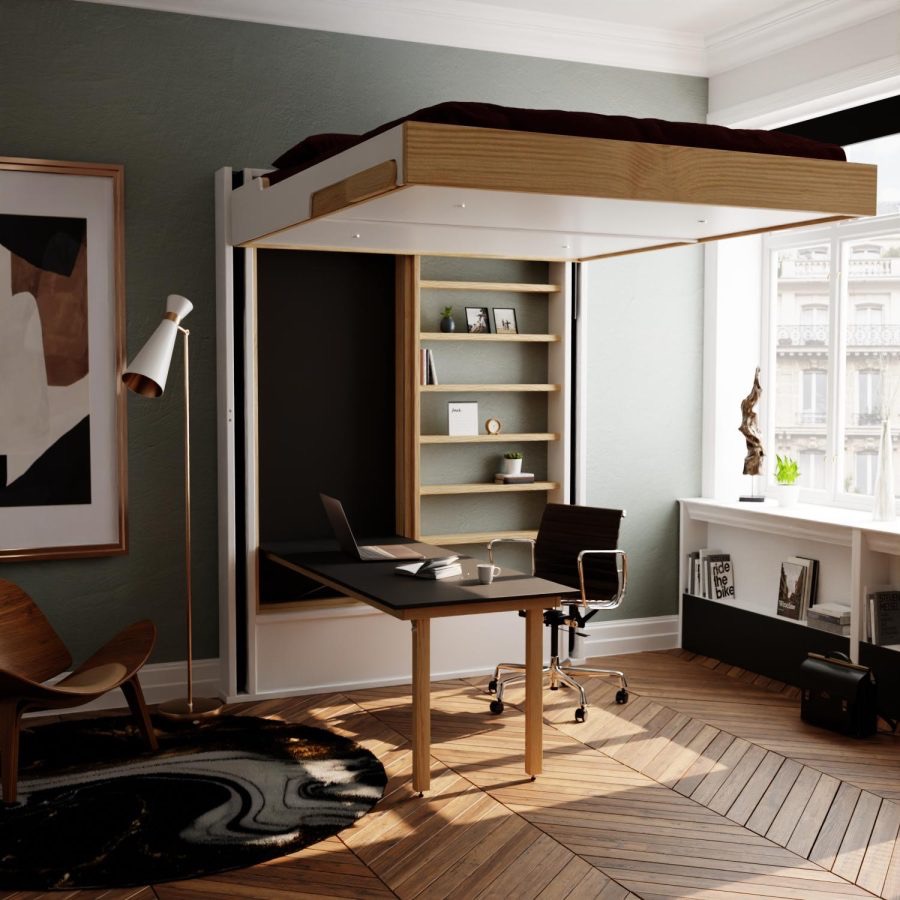
What drives the trend is not less space — but more idea per square metre. Transformable furniture folds away, slides, disappears or moves into position at the press of a button. Brands like Clei (Italy), Espace-Loggia (France) or Resource Furniture (USA) demonstrate how beds vanish into walls, coffee tables convert into dining tables or entire kitchens appear only when needed as a “kitchen-in-a-wall“.
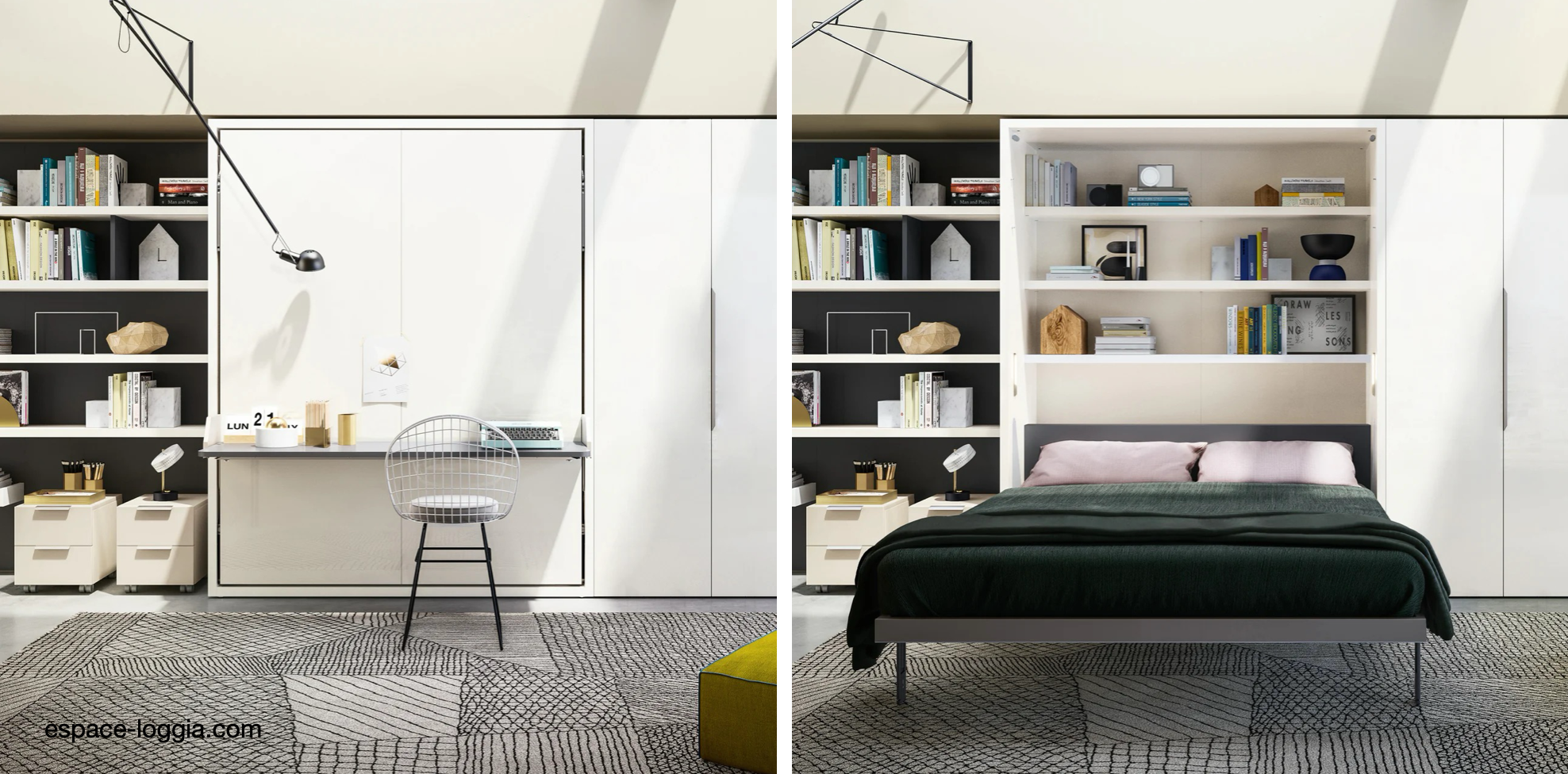
Espace-Loggia combines sleeping, storage and work areas within vertical, fold-away modules.
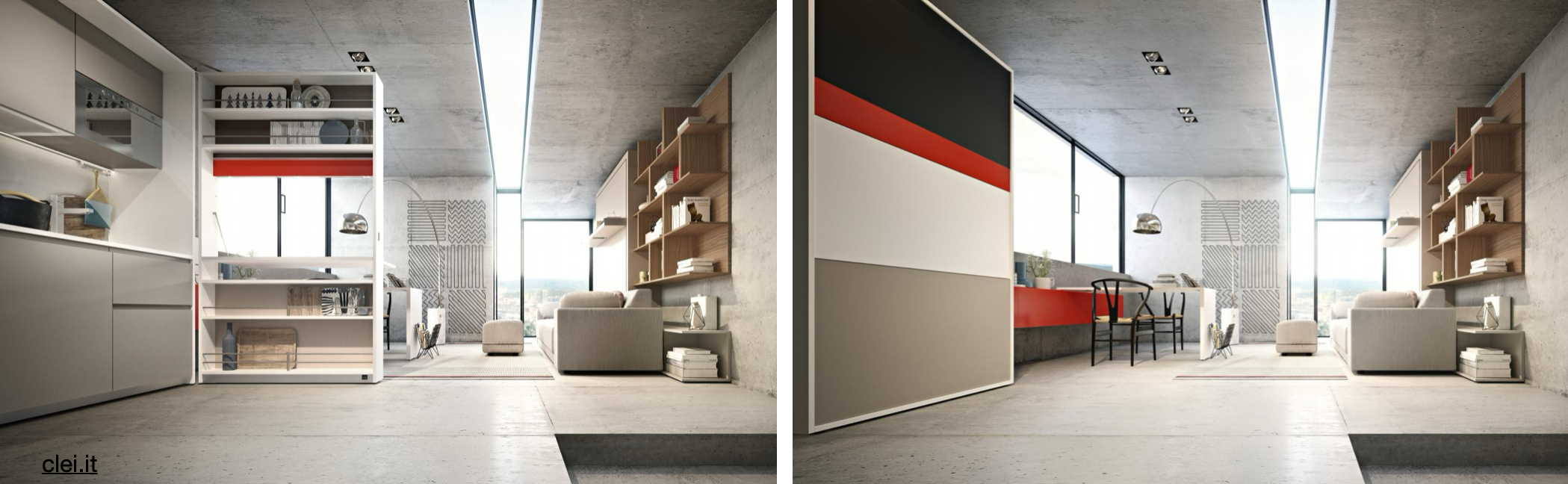
Hidden built-in kitchen by Clei, shown in its closed “kitchen-in-a-wall” state, fully integrated into a living-wall system.
At the same time, adaptive approaches emerge: early “robotic furniture” concepts that move via sensors or motorisation — today mostly in premium studios, tomorrow likely more widespread.
Zoning is also being rethought. Instead of building permanent walls, modular systems come into play. One example is “Link” by Movisi — a room divider that can be composed, expanded, regrouped and staged decoratively. Not for daily change — but ideal when one space is meant to serve multiple identities over time.
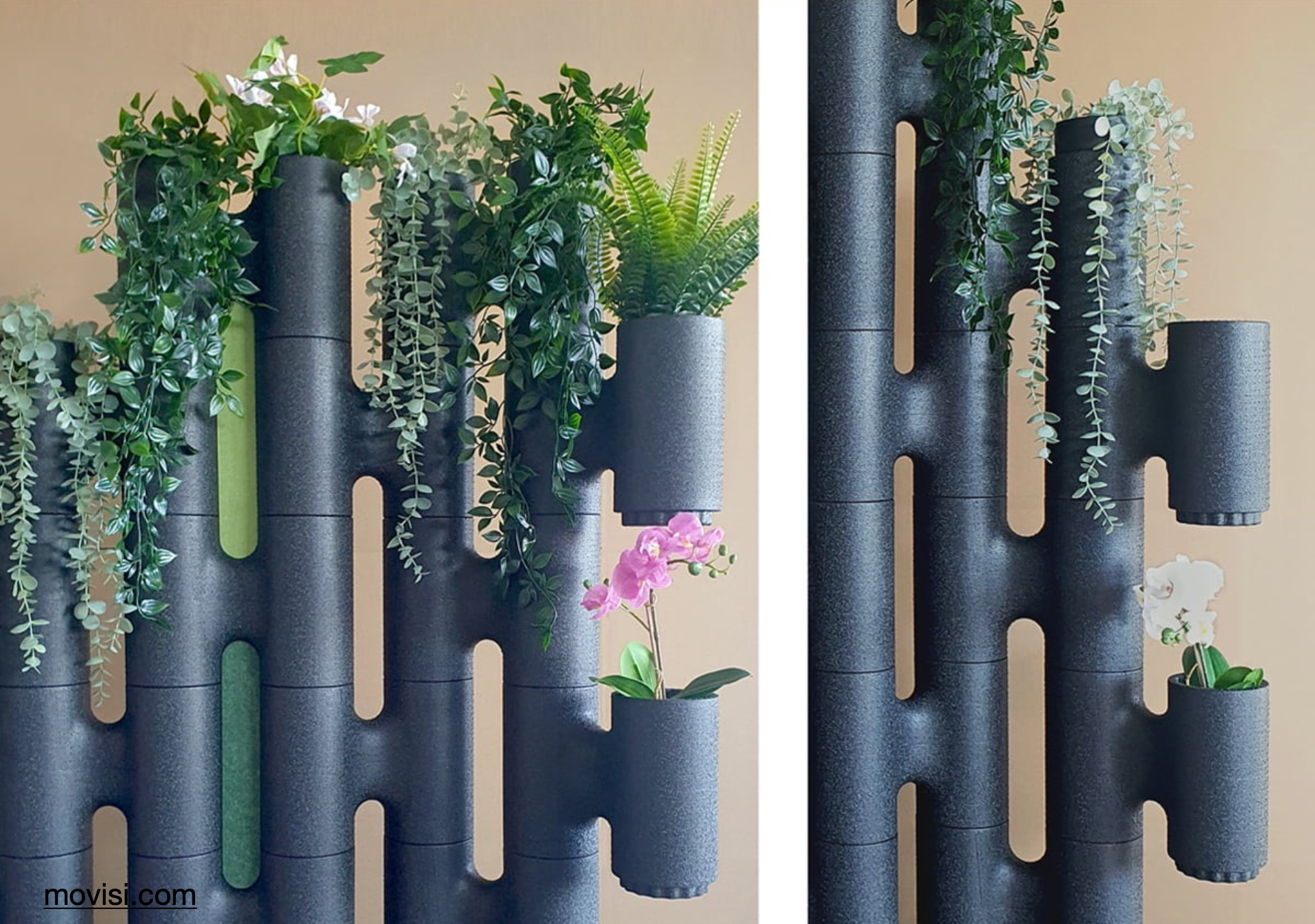
The modular “Link” room divider by Movisi can be configured flexibly and also serves as a decorative design element.
Looking ahead? AI-assisted space design, generative layouts, robotic modules. Micro-living is no longer about thinking smaller — but thinking sharper, smarter, quieter and with greater design ambition. Where space is scarce, ideas gain volume.